
CellSight™ DNA
See the Whole Picture of Tumor Evolution
A comprehensive genomic profiling test performed on intact circulating tumor cells, not DNA fragments, from a single blood draw. Run in our CLIA-certified laboratory on a proprietary, patent-pending isolation method.
517
Genes profiled from intact tumor cells
>99%
Analytical sensitivity for single nucleotide variants
10 to 14
Days from specimen receipt to report
CLIA
Certified laboratory, Jupiter, Florida
Whole Cells, Not Fragments
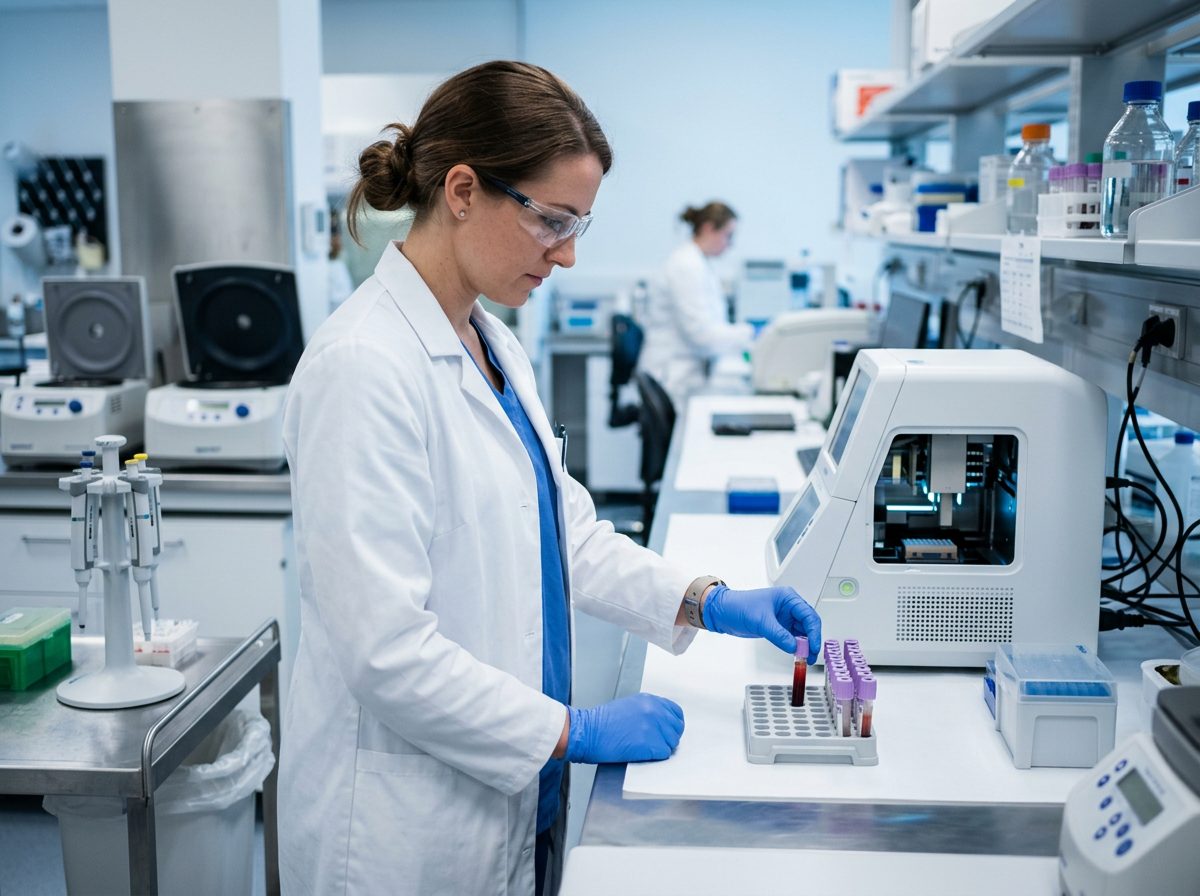
Unlike ctDNA tests, CellSight™ DNA analyzes intact tumor cells. We isolate circulating tumor cells from blood, confirm them, and sequence the DNA they carry.
Cell-free DNA assays analyze short fragments from many sources and must infer which fragments are tumor-derived. Whole-cell analysis starts from the tumor cell itself, so the DNA we sequence has a known origin.
That origin matters most for copy number variants and tumor mutational burden, where fragment-based approaches depend on the tumor fraction in the sample. It also lets us report how many tumor cells were present at the time of the draw, and because the cells are preserved, the same material can support future RNA, protein and multiomic applications.
What It Detects
517-Gene Panel
Broad genomic coverage across diverse solid tumors, reported as SNVs, indels and copy number variants.
Single Nucleotide Variants
5% limit of detection, greater than 99% analytical sensitivity and greater than 97% positive predictive value in validation.
Tumor Mutational Burden
A pan-tumor biomarker evaluated against accepted reference standards to support checkpoint inhibitor strategies.
Microsatellite Instability
Genomic instability assessed against established references to support immunotherapy selection.
Key Advantages
- Whole-cell approach. Intact tumor biology, not fragments.
- Fast results. Target turnaround of 10 to 14 days.
- Pan-cancer utility. Validated across a range of solid tumors.
- No tissue required. Built for noninvasive and difficult-to-biopsy cases.
- Patient-centered billing. Clear billing designed to avoid surprises.
Assay Specifications
| Specimen | Two 10 mL CellSave CTC Preservation Tubes of peripheral whole blood (kit supplied), shipped chilled at 2 to 8 °C. Streck and EDTA tubes are not accepted. |
|---|---|
| Cell isolation | Negative-selection enrichment with a proprietary, patent-pending method; candidate tumor cells identified by a proprietary process. |
| Enumeration | CTC count reported for the entire patient accession. |
| Sequencing | Next-generation sequencing, 517-gene panel. |
| Reported alterations | Single nucleotide variants (SNVs), insertions and deletions (indels), copy number variants (CNVs). |
| Signatures | Tumor mutational burden (TMB) and microsatellite instability (MSI). |
| Turnaround | 10 to 14 days from specimen receipt. |
| Laboratory | CLIA-certified laboratory, Jupiter, Florida. CLIA 10D2312417. |
| Report delivery | Secure Client Portal, with PDF download. |
CellSight™ DNA is a laboratory-developed test. It has not been cleared or approved by the U.S. Food and Drug Administration.
Ready to Get Started?
Three steps from account to result.
Create Your Account
A secure Client Portal account for submitting orders, accessing reports and tracking cases.
Download the Test Requisition Form
The TRF captures the clinical context we use for reporting and lets you select testing options.
Schedule Sample Pick-Up
Arrange collection with our logistics team so the specimen is handled properly from draw to lab.
Key Documents & Resources
Test Requisition Form →
Order form with specimen collection and shipping instructions. PDF, 1 page.
Sample Report →
A de-identified colorectal cancer report showing how results are delivered. PDF, 7 pages.
Assay Validation Summary →
Analytical performance and the full 517-gene list with coverage annotations. PDF, 2 pages.
Publications →
Request the current publication list from our clinical team.
See What a CellSight™ DNA Report Looks Like